
A new urinary microRNA clock brings aging biology out of the lab and into everyday life.
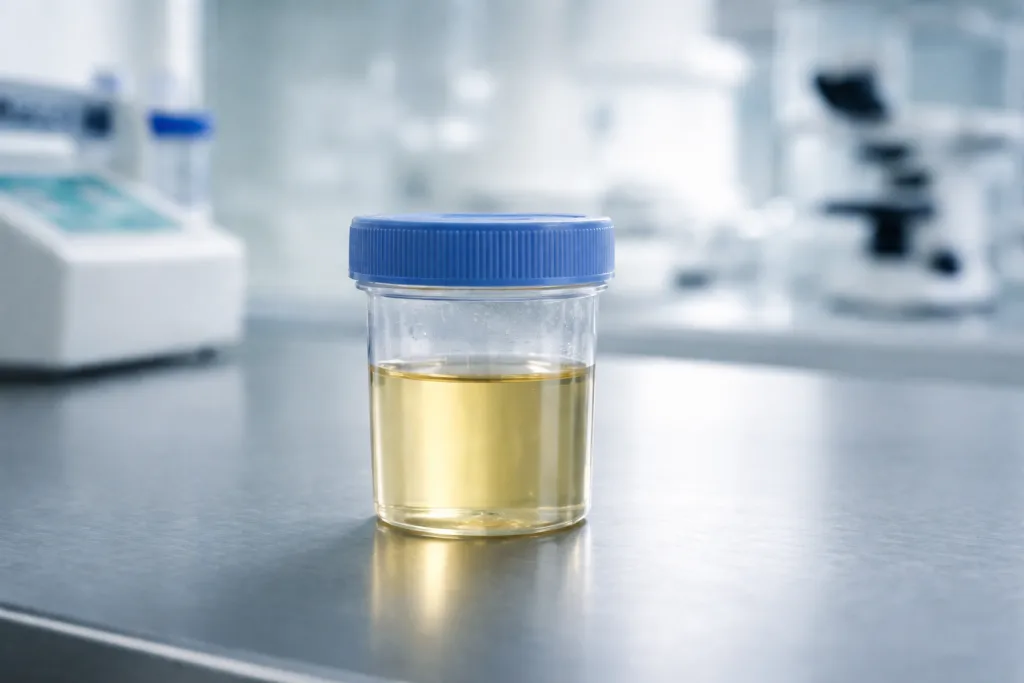
What if aging could be tracked with a urine sample instead of a blood draw or expensive DNA test? A new study published this week in npj Aging suggests that future is closer than we thought.
Researchers analyzing over 6,300 adults have built a urinary microRNA aging clock that predicts biological age with surprising accuracy. The model comes within about 4.4 years of a person’s true age, using nothing more than molecules flushed out in urine.
This could change how aging, disease risk, and longevity are measured at scale.
Want to track your biological age right now? Tests like GlycanAge already let you measure age-related immune changes years before disease shows up.
Key takeaways
- 🧬 Urine can predict biological age. A machine-learning model using urinary microRNAs reached R² ≈ 0.79, rivaling many invasive tests.
- 🚽 Truly non-invasive. No blood, no biopsies, no DNA methylation assays.
- 🧠 Built on known aging biology. The clock relies on well-studied “geromiRs” linked to inflammation, senescence, and immune aging.
- 📈 Scalable for real-world use. Easier sampling means potential for population-wide aging and disease-risk screening.
Why urine is a big deal in aging research
🧪 Blood isn’t as practical as we think
Most biological aging clocks today rely on DNA methylation in blood, like the classic Horvath clock. They are powerful but also:
- Invasive
- Costly
- Logistically difficult at scale
Urine flips that equation.
It’s easy to collect, repeatable over days, and already used routinely in clinical medicine. Until recently, it wasn’t considered rich enough in aging signals. That assumption is now outdated.
The science behind the urinary aging clock
🧬 MicroRNAs: tiny molecules with big influence
MicroRNAs, or miRNAs, are short RNA molecules that fine-tune gene expression. They act like dimmer switches for inflammation, metabolism, cell division, and stress responses.
Several miRNAs consistently change as we age. These are often called geromiRs.
In this study, the most influential markers included:
- miR-34a-5p – linked to cellular senescence and frailty
- miR-31-5p – associated with tissue aging
- miR-146a-5p – a regulator of chronic inflammation
- miR-155-5p – involved in immune aging
These same miRNAs have been implicated in diabetes, cardiovascular disease, dementia, and cancer risk.
That overlap matters.
How the researchers built the clock
📊 A massive dataset, not a small pilot
The team analyzed 6,331 adult urine samples, one of the largest datasets ever used for miRNA-based aging research.
They used:
- High-throughput sequencing of urinary extracellular vesicles
- Machine-learning models optimized with cross-validation
- An independent validation cohort
The result:
- Mean absolute error: ~4.4 years
- Explained variance (R²): ~0.79
That’s not quite as precise as top-tier DNA methylation clocks, but it outperforms blood-based miRNA and mRNA clocks published so far.
Why this matters beyond accuracy
🚽 Non-invasive changes everything
Accuracy is only part of the story.
A slightly less precise test that is cheap, painless, and repeatable may be far more useful in the real world than a perfect test no one wants to take.
Think about:
- Annual aging check-ups
- Monitoring lifestyle interventions
- Large-scale population aging studies
- Early disease-risk detection
Urine-based clocks make those scenarios realistic.
Disease risk may be the real payoff
🧠 Aging clocks aren’t just about age
Biological age acceleration is strongly linked to:
- Multimorbidity
- Cognitive decline
- Cardiovascular disease
- Mortality risk
Because this urinary clock captures inflammatory and immune-related miRNAs, it may be especially good at flagging early disease processes, not just birthdays.
Previous research already shows urinary miRNAs can detect:
- Pancreatic cancer
- Esophageal cancer
- Kidney disease
- Metabolic disorders
Adding an aging clock on top of that creates a powerful screening tool.
Who’s behind the work
The research was led by scientists at Craif Inc., a Japanese biotech focused on urine-based diagnostics, in collaboration with Nagoya University.
The company already works on early cancer detection using urinary microRNAs, so this aging clock fits directly into a broader diagnostic vision.
It’s also worth noting the transparency:
- The machine-learning code is publicly available on GitHub
- De-identified expression data can be accessed for non-commercial research
Important caveats to keep in mind
⚠️ This is not a consumer test yet
Despite the excitement, a few limitations matter:
- The raw sequencing data is proprietary
- The model is not yet validated for clinical decision-making
- We don’t know how well it tracks interventions like exercise, diet, or drugs
DNA methylation clocks still lead in precision and clinical validation.
For now.
What comes next
🔮 The future of aging measurement
The most likely path forward isn’t replacing DNA clocks, but combining them.
Imagine:
- DNA methylation for deep biological precision
- Urinary miRNAs for frequent, low-cost monitoring
- Blood proteins for disease-specific risk
Together, they could create a full-stack aging dashboard.
This study shows urine deserves a seat at that table.
Bottom line
A urine sample can now estimate biological age with meaningful accuracy.
That may sound simple, but it’s a conceptual shift. Aging biology is moving out of elite labs and toward tools that scale to real life.
The future of longevity tracking may start in the bathroom.
Sources
- A urinary microRNA aging clock accurately predicts biological age
https://doi.org/10.1038/s41514-025-00311-3
Created by SimplyAntiAging.com’s Editorial Research Team
Reviewed and updated for accuracy in January 2026.